A Glorification of Śrīla Bhaktisiddhānta Sarasvatī Ṭhākura Prabhupāda
A Glorification of Śrīla Bhaktisiddhānta Sarasvatī Ṭhākura Prabhupāda
This recently discovered article was written by Śrīla B.G. Narasiṅgha Mahārāja in December 2000 as ‘A Glorification of Śrīla Bhaktisiddhānta Sarasvatī Ṭhākura Prabhupāda’ on his 126th appearance celebration. Śrīla Narasiṅgha Mahārāja writes about the bhāgavat-paramparā, the decline of Gauḍīya Vaiṣṇavism after Mahāprabhu, and its resurrection by Ṭhākura Bhaktivinoda and Sarasvatī Ṭhākura.
We humbly offer our most respectful obeisances unto the charming effulgence that shines forth from the radiant lotus toe-tips of that revered transcendental personality Oṁ Viṣṇupāda Paramahaṁsa Parivrājakācārya Śrī Śrīmad Bhaktisiddhānta Sarasvatī Ṭhākura Prabhupāda, whose beautiful lotus feet are cherished by millions and millions of the purest and most qualified devotees. He is the most competent personality to preach the recognised process of devotional service for this era, and shines forth as the natural leading monarch within the extremely advanced devotee’s camp. His lion-like roar causes the envious to tremble and quickly flee, and his tender lotus feet gracefully bestow the ultimate benefit for the innocent. He has widely spread the glories of Śrī Gaurāṅga’s holy abode, Śrī Māyāpura-dhāma, and that graceful personality has planted the lotus of Śrī Gaura’s holy feet in the hearts of His deserving servitors. He is the eternal refuge of Śrī Gaurāṅga’s devotees, and is dedicated to serving his spiritual master, Śrīla Gaura Kisora, and is a careful servant of Śrīla Bhaktivinoda Ṭhākura. His intense magnitude of devotion allows him a glorious position within the intimate group of Śrīla Raghunātha Dāsa, Śrīla Sanātana, and Śrīla Rūpa Gosvāmī, and his happy and elevated philosophical conceptions have crowned and seated him along with that esteemed personality, Śrīla Jīva Gosvāmī. He has a friendly relationship with Śrī Kṛṣṇa Dāsa Kavirāja Gosvāmī and Śrī Narottama Dāsa, and is as dear to them as their very own lives. His loving disposition is more affectionate than even a father to the followers of Lord Gaurāṅga, his purity attracts even the great administrative demigods, and he is the keeper of life’s highest wealth – pure love for Śrī Śrī Rādhā-Govinda.
The phrase, ‘Śrī Caitanya Sārasvata paramparā’ indicates the disciplic succession which was handed down from the time of Śrī Caitanya Mahāprabhu to that of Śrīla Bhaktisiddhānta Sarasvatī Ṭhākura. This paramparā is a succession of divine knowledge (divya-jñānam), also known as the ‘Brahma Madhva Gauḍīya sampradāya,’ or the ‘bhāgavat-paramparā.’
‘Brahma-Madhva’ indicates the preceptors from Lord Brahmā to Madhvācārya, who carried the paramparā in ancient times. The use of the term ‘bhāgavat-paramparā’ indicates the preceptorial line of the principles contained in Śrīmad Bhāgavatam. The bhāgavat-paramparā itself began at the outset of this universe wherein Śrī Kṛṣṇa spoke the Śrīmad Bhāgavatam in four nutshell verses to Lord Brahmā. Lord Brahmā then spoke those four essential verses to his disciple Nārada, who in turn taught those verses to Veda Vyāsa, who, upon his mature realisation, compiled the Śrīmad Bhāgavatam (in twelve cantos) as we know it today. Vyāsa’s disciple was Śrī Madhvācārya. From Madhvācārya, the disciplic succession came to Śrī Mādhavendra Purī, the fifteenth preceptor in the line. Mādhavendra Purī’s disciple was Śrī Īśvara Purī, who became glorious as the spiritual master of Śrī Caitanya Mahāprabhu.
It is indeed the Śrīmad Bhāgavatam and its principles therein which figure most prominently in the bhāgavat-paramparā. The Vedas have been compared to a kalpa-taru (desire tree) and the mature fruit of that tree is the Śrīmad Bhāgavatam.
*nigama-kalpa-taror galitaṁ phalaṁ
śuka-mukhād amṛta-drava-saṁyutam
pibata bhāgavataṁ rasam ālayam
muhur aho rasikā bhuvi bhāvukāḥ*
O rasikas, relish the mature fruit of the Bhāgavatam, the desire tree of the Vedas which emanated from the lips of Śuka. Thus this fruit has become even more tasteful, although its ambrosial nectar was already relishable for all, including liberated souls. (Śrīmad Bhāgavatam 1.1.3)
The Śrīmad Bhāgavatam contains ten divisions, or principles, regarding the Absolute Truth.
*atra sargo visargaś ca sthānaṁ poṣaṇam ūtayaḥ
*manvantareśānukathā nirodho muktir āśrayaḥ
Thus, there is creation, secondary creation, maintenance, protection by the Lord, the urge for creation, the activities of the Manus, narrations about the Lord, the annihilation of the universe, liberation and the supreme shelter. (Śrīmad Bhāgavatam 2.10.1)
The summum bonum of Śrīmad Bhāgavatam is found in the Tenth Canto wherein the transcendental pastimes of Śrī Kṛṣṇa with the vraja-gopīs are described. This section is the foremost āśraya-tattva of the Bhāgavatam.
Prior to the advent of Śrī Caitanya Mahāprabhu, all ten principles of the Śrīmad Bhāgavatam were explained by previous ācāryas like Madhvācārya. The conception of these ācāryas, however, was that Nārāyaṇa is the āśraya-tattva. The revelation that Śrī Kṛṣṇa is the āśraya-tattva had remained undisclosed to any *ācārya *since the advent of the Śrīmad Bhāgavatam — waiting for the reappearance of Kṛṣṇa in the form of Śrī Caitanya Mahāprabhu to become fully manifest. Indeed, it was this conclusive truth, which had never been distributed before, that Śrī Caitanya Mahāprabhu came to give.
*anarpita carīṁ cirāt karuṇayāvatīrṇaḥ kalau
samarpayitum unnatojjvala-rasāṁ svabhakti śriyam
hariḥ puraṭa sundara dyuti-kadamba sandīpitaḥ
sadā hṛdaya-kandare sphuratu vaḥ śacī-nandanaḥ*
He has mercifully appeared in the Age of Kali to bestow that which was never offered before – the wealth of His own splendorous devotional conjugal rasa. May that Hari, the Son of Śacī, who is more beautiful and effulgent than masses of gold, be forever manifest within your heart. (Caitanya-caritāmṛta, Ādi-līlā 1.1.4)
*namo mahā-vadānyāya kṛṣṇa-prema-pradāya te
kṛṣṇāya kṛṣṇa-caitanya-nāmne gaura-tviṣe namaḥ*
I offer my respects unto Kṛṣṇa, who is supremely magnanimous, who distributes kṛṣṇa-prema and has appeared in a golden form with the name ‘Kṛṣṇa Caitanya’. (Caitanya-caritāmṛta, Madhya-līlā 19.53)
One may argue that pure love for Kṛṣṇa, being the purport of Śrīmad Bhāgavatam, was surely realised to some extent by previous ācāryas, but that love, reaching its highest and fullest expression in the personality of Śrīmatī Rādhārāṇī, was only clearly revealed through the paramparā after the appearance of Śrī Caitanya Mahāprabhu. It was Śrī Caitanya Mahāprabhu and His followers, such as Śrī Rūpa Gosvāmī and Raghunātha Dāsa Gosvāmī, who announced that Śrīmatī Rādhārāṇī is the supreme shelter (āśraya) of all living entities. This is the āśraya of which the Śrīmad Bhāgavatam ultimately speaks. This conception of Śrīmatī Rādhārāṇī as the supreme āśraya-tattva was unknown to any Vaiṣṇava paramparā prior to Śrī Caitanya Mahāprabhu’s appearance, and such a conception is still only accessible through His bona fide succession.
Based on the instructions of Śrīmad Bhāgavatam, Śrī Caitanya Mahāprabhu introduced the saṅkīrtana movement (the chanting of the Holy Names of God) as the prime benediction for humanity at large — for by such chanting, the living entities can be delivered from the darkness of material ignorance.
nāma saṅkīrtanaṁ yasya sarva pāpa pranāśanam
pranāmo duḥkhaśamanas taṁ namāmi hariṁ param
I offer my respects unto Lord Hari, the congregational chanting of whose Names destroys all reactions to sinful activities, and the offering of obeisance unto whom relieves all material suffering. (Śrīmad Bhāgavatam 12.13.23)
Similarly, Śrī Caitanya Mahāprabhu taught the esoteric principles of the Śrīmad Bhāgavatam to His most confidential devotees, thus enabling them to enter into the transcendental pastimes of the Supreme Lord in spontaneous love of God.
From Śrī Caitanya Mahāprabhu, the paramparā came through Svarūpa Dāmodara Gosvāmī, Rūpa Gosvāmī, Sanātana Gosvāmī, Raghunātha Dāsa Gosvāmī, Jīva Gosvāmī, and from Kṛṣṇa Dāsa Kavirāja Gosvāmī to Narottama Dāsa Ṭhākura, to Viśvanātha Cakravartī Ṭhākura, to Jagannātha Dāsa Bābājī Mahārāja, to Śrīla Bhaktivinoda Ṭhākura and Gaura Kiśora Dāsa Bābājī Mahārāja, to Śrīla Bhaktisiddhānta Sarasvatī Ṭhākura.
However, after the disappearance of Śrī Caitanya Mahāprabhu from the eyes of this mortal world, many deviant paramparās (sahajiyās) immediately began to manifest. In numerous ways, the sahajiyās attempted to monopolise the treasure chest of Śrī Caitanya Mahāprabhu’s gift of divine love, thus causing a great confusion in the minds of innocent people. By the end of the 19th Century, the line of divinity established by Śrī Caitanya Mahāprabhu had almost disappeared from sight. The situation was dismal—rascals and cheaters had destroyed the pure principles of the bhāgavat-paramparā and in turn, they propagated the lowest standard of sinful behaviour in the name of rāgānuga-bhakti, pure spontaneous love.
For a long time, the sahajiyās had continuously misrepresented the principles of pure devotional service under the false practices of rāgānuga–bhakti, and that which the Śrīmad Bhāgavatam stood for became tarnished and eventually covered. These sahajiyā communities, namely the āula, bāula, kartābhajā, neḍā, daraveśa, sāṅi, sahajiyā, sakhī-bekhī, smārta, jāta-gosāī, ativāḍī, cūḍadhārī, and gaurāṅga-nāgarī became so degraded that the very word ‘Vaiṣṇava’ was spoiled in Bengal. Without going into detail at this point, it is sufficient to say that under the patronage of the above-mentioned sahajiyā communities, Vaiṣṇavaism became known as a religion or occupation of women-hunters, drunkards and beggars. This situation was intolerable for the pure-hearted devotees of the Supreme Lord.
At that time, the Supreme Lord, Śrī Caitanya Mahāprabhu, sent two of His most confidential servants to take birth in this world. These two confidential servants were Svarūpa Dāmodara and Gadādhara Paṇḍita who appeared as Gaura Kiśora Dāsa Bābājī and Bhaktivinoda Ṭhākura respectively. These two great personalities became the shelter of all sincere followers of Śrī Caitanya Mahāprabhu during their time.*****
**NOTE: **The spiritual identities of Bhaktivinoda Ṭhākura and Gaura Kiśora Dāsa Bābājī are Kamalā Mañjarī and Guṇa Mañjarī, yet Śrīla Sarasvatī Thākura has revealed at the end of his Anubhāṣya commentary on Caitanya-caritāmṛta, that Bhaktivinoda Ṭhākura and Gaura Kiśora Dāsa Bābājī were in the same mood of Śrī Gadādhara Paṇḍita and Śrī Svarūpa Dāmodara Gosvāmī respectively.
The intimate disciple of both Śrīla Bhaktivinoda Ṭhākura and Śrīla Gaura Kiśora Dāsa Bābājī Mahārāja was Śrīla Bhaktisiddhānta Sarasvatī Ṭhākura. Sarasvatī Ṭhākura appeared in this world as the fourth son of Bhaktivinoda, and from his childhood to his old age, he dedicated his entire life to removing the clouds of misconception that covered the pure religion of Śrī Caitanya Mahāprabhu.
Once, our spiritual master, Śrīla A.C. Bhaktivedānta Swami Prabhupāda, was asked by a young devotee to say something about Śrīla Bhaktisiddhānta Sarasvatī Ṭhākura. In reply he said, “What can I say to you? He was a Vaikuṇṭha man.” Here, the meaning of ‘Vaikuṇṭha’ must be taken in its most fundamental sense, which means ‘beyond material conception.’ Indeed, this is a most fitting description of Śrīla Sarasvatī Ṭhākura – beyond material conception, or beyond the reaches of our material calculations. He was cent per cent a man of the upper world, whose eternal associates are none other than the Supreme Lord’s dearmost servants. Sarasvatī Ṭhākura descended to this world from the inner circle of the Lord’s domain, and his philosophical conceptions (siddhānta) were wholly that of Śrī Caitanya Mahāprabhu — one could not trace mundanity in him at any time in his career. Sarasvatī Ṭhākura appeared in this world on the prayer of Śrīla Bhaktivinoda Ṭhākura with a mission to remove the misconceptions that covered the living entities pure consciousness, and to illuminate the path of pure devotional service.
nikhila-bhuvana-māyā*–**chinnāvichina-kartrī
vibudha-bahula-mṛgyā-mukti-mohanta-dhātri
śithilita-vidhi-rāgā-rādhya-rādheśa-dhānī
vilasatu hṛdi nityaṁ bhaktisiddhānta vānī*
With his first step, he cut to pieces the whole plane of exploitation, and with his second, he crushed the speculation of scholars of salvation and liberation. With his third, he softened vaidhi-bhakti with a touch of divine love (rāga–mārga). Taking us beyond Vaikuntha, he has introduced us to the highest worship of Śrī Rādhā and Govinda. With the softness of Vṛndāvana within, and the hardness of a devastator without, he created havoc in the world — fighting with one and all. Single-handedly fighting against the whole world, and cutting everything to pieces — that was his external attitude. And his second attitude was to stop the boasting research of the scholars and doctors of different schools of thought; the third, to minimise and slacken the grandeur of the worship of Nārāyaṇa, and establish the service of Rādhā-Govinda as the highest attainment. He caused the domain of love to descend into this plane, with the service of Rādhā-Govinda, establishing the flow of divine love from the heart as all in all. That was his history — the real existence of Śrīla Bhaktisiddhānta Sarasvatī Ṭhākura. May his divine teachings, bhaktisiddhānta-vānī, dance eternally within the core of our hearts. (Śrīla B.R. Śrīdhara Deva Gosvāmī Mahārāja)
The Śrī Caitanya Sārasvata paramparā is indeed a bona fide disciplic succession of pure devotees of the Supreme Lord which has existed since the most ancient times. Yet in modern times, the eternal flow of the divine knowledge of that paramparā was obstructed by unqualified persons. Such persons, posing as spiritual masters, had made a mockery of the esoteric principles of the Śrīmad Bhāgavatam by a cheap show of imitating the higher sentiments of divine love. At that very peak of degradation in Gauḍīya Vaiṣṇavaism, Śrīla Sarasvatī Ṭhākura appeared and recovered the principles of the Śrīmad Bhāgavatam from the hands of such rogues and resurrected the path of the bhāgavat-paramparā.
Unlike many so-called paramparās of his day, the paramparā of Sarasvatī Ṭhākura was not simply a succession of bodies wherein dead mantras are passed on from guru to disciple, despite their obvious disqualifications. Nor was the paramparā of Sarasvatī Ṭhākura a disciplic succession of merchants who make a trade of mantras in exchange for money. Nor was the paramparā of Sarasvatī Ṭhākura a disciplic succession of cheaters who compromise the regulative principles of purity by keeping illicit connections with women, claiming that such is not a disturbance to the performance of one’s bhajana. The paramparā of Sarasvatī Ṭhākura was, however, the descent of the highest principles of the Śrīmad Bhāgavatam exhibited in both deed and concept.
Śrīla Sarasvatī Ṭhākura appeared in this world at a time when the storehouse of the proper conception regarding Śrī Caitanya Mahāprabhu’s nectarine teachings had been sealed tight by pseudo-Vaiṣṇavas. Sarasvatī Ṭhākura reopened that storehouse and showed the bona fide way of accessing the highest plane of divinity by his personal example. Sarasvatī Ṭhākura preached strongly against the abominable practices and concepts of the sahajiyās, and within his own movement, he also remained vigilant for any potential imitation of pure devotion. His language was strong, and he made it clear to his disciples and followers that real devotion was not simply cheap sentiment. Devotion, he said, means submission to Śrī Guru, self-discipline, self-sacrifice, and a wholehearted effort to render devotional service. Sarasvatī Ṭhākura stressed that without going through all the stages of regulated practice (vaidhi-bhakti), one cannot come to the platform of spontaneous love (rāgānuga-bhakti).
The dress associated with the eternal associates of Śrī Caitanya Mahāprabhu (bābājī-veśa) had become identified with the lowest men in society. To save the dignity of the paramahaṁsas, the highest order of Vaiṣṇavas, Sarasvatī Ṭhākura introduced saffron cloth and the triple staff belonging to the ancient order of renunciates known as tridanḍi-sannyāsa. This, of course, raised considerable controversy at the time, and many dishonest persons criticised Sarasvatī Ṭhākura for concocting an unauthorised means of devotional service. However, Sarasvatī Ṭhākura had not actually concocted anything — indeed, he had re-established the the practices of attaining the lotus feet of Kṛṣṇa as authorised by Śrī Caitanya Mahāprabhu Himself. At that time, seeing this illuminating personality standing in the midst of many dark clouds, honest and sincere Vaiṣṇavas gathered in support of Sarasvatī Ṭhākura and assisted him in carrying forth the purely theistic principles of the bhāgavat-paramparā.
The Tenth Canto of the Śrīmad Bhāgavatam is the proyojana-tattva (the highest truth) through which one can taste the eternal nectar of divine love. As such, the sahajiyās are extremely fond of hearing the Tenth Canto, although they consistently neglect the first nine cantos. It is the first nine cantos of the Śrīmad Bhāgavatam that qualify the bona fide candidate for actually entering into the transcendental pastimes of the Supreme Lord. Yet the sahajiyās prefer to jump over the first nine cantos in order to ‘get the nectar.’ In the opinion of Sarasvatī Ṭhākura, a neophyte devotee should never have access to topics such as the intimate pastimes of the Lord, because if one prematurely enters the realm of Kṛṣṇa’s higher pastimes, it will bring more harm than good. If one is not situated beyond the propensity for sense gratification, yet indulges in hearing or meditating on the intimate pastimes of Śrī Śrī Rādhā-Kṛṣṇa, one’s enjoying spirit will only increase. One must be fully aware of the Lord’s transcendental nature before entering into discussions/meditation on the Lord’s divine pastimes with His hlādinī-śakti. Thus, Sarasvatī Ṭhākura did not encourage newcomers to read the Tenth Canto of Śrīmad Bhāgavatam. He also disapproved of indiscriminately displaying paintings of rādhā-kṛṣṇa-līlā. His standards where high because the goal was high—he did not allow a mockery of the highest conception to be made at any time.
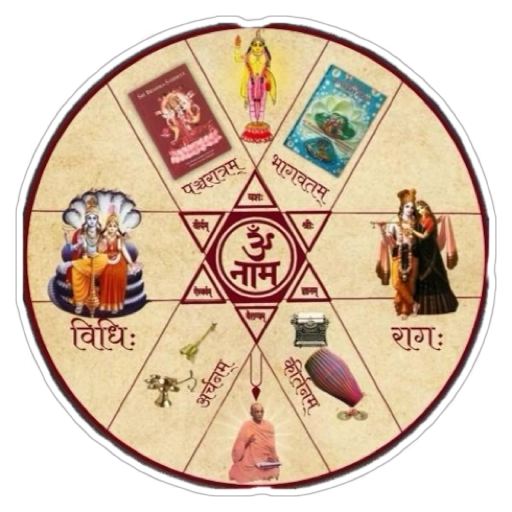
To establish the principles of pure devotional service, Sarasvatī Ṭhākura wrote many articles in The Harmonist, The Gauḍīya and Nadīyā Prakāśa exposing the false practices of the imitationists. Following in the footsteps of Śrīla Bhaktivinoda Ṭhākura, Sarasvatī Ṭhākura established a printing press which he called the bṛhat *mṛdaṅga *(‘the great drum’). In the transcendental vision of Sarasvatī Ṭhākura, the printing press belonged to the category of rāgānuga-bhakti, and he stressed book distribution and preaching in the same light. A logo for the Gauḍīya Maṭha was designed by him in which a circle was drawn, and various symbols representing the bona fide processes of devotional service were depicted within that circle. The circle was divided into two sections – on the left side, the symbols representing vaidhi-bhakti were placed, such as the pañcarātrika literature and Lakṣmī-Nārāyaṇa, representing worship in the mood of awe and reverence according to regulative principles. On the right side of the circle were placed the symbols representing rāgānuga-bhakti, such as the Śrīmad Bhāgavatam and Śrī Śrī Rādhā-Kṛṣṇa, indicating worship in spontaneous love (rāga-mārga). The symbols of the mṛdaṅga and the printing press were also placed in the rāga-mārga section.
In the beginning of the book, Śrī Caitanya-maṅgala by Locana Dāsa Ṭhākura, it is mentioned that in the future there will appear a senā-pati (a great general) who will cause an inundation of Kṛṣṇa consciousness throughout the world. Greatly learned scholars and pure devotees of Śrī Caitanya Mahāprabhu who know the purport of the scriptures have understood that sena-pati to have been Śrīla Bhaktisiddhānta Sarasvatī Ṭhākura, who between 1918 and 1936, caused a wave of Kṛṣṇa consciousness preaching to swell up in Bengal that would indeed eventually inundate the whole world. The sound of the kīrtana raised by Sarasvatī Ṭhākura conquered all ten directions, silencing the atheistic non-believers, the impersonalist speculators, and the imitationist sahajiyā sections of pseudo-Vaiṣṇavas.
Sarasvatī Ṭhākura orchestrated a great preaching movement for eighteen years, awarding the triple staff of renunciation to his disciples, then sending those sannyāsīs to preach throughout India and eventually in western countries. Before passing away from this world, Sarasvatī Ṭhākura commented that he desired to spend at least ten years preaching Kṛṣṇa consciousness in the western countries—Sarasvatī Ṭhākura was unable to do this before his disappearance in 1936. However, through his intimate disciple, Śrīla A.C. Bhaktivedānta Swami Prabhupāda, Sarasvatī Ṭhākura’s last desire for preaching Kṛṣṇa consciousness in the west was fulfilled. Hence, the work of the senā-pati foretold by Locana Dāsa Ṭhākura was continued by Śrīla A.C. Bhaktivedānta Swami Prabhupāda, and the same continues up to the present day in the form of Sarasvatī Ṭhākura’s numerous disciples and grand-disciples.
Related Krishna Talk Articles
📖 Questions and Answers on the Guru Principle (Book) 📖 Prabhupāda Vijaya (Book) 📖 The Authorized Sri Caitanya Saraswata Parampara (Book) 📚 The Adbhūta Mandira Series Topics about Vaiṣṇava Sārvabhauma Śrīla Jagannātha Śrīdhara Deva Gosvāmī by Śrīla Bhakti Gaurava Narasiṅgha Mahārāja Paramparā by Śrīla Bhakti Gaurava Narasiṅgha Mahārāja The Rāga-Patha is Above All by Śrīla Bhakti Gaurava Narasiṅgha Mahārāja His Last Instructions by Śrīla Bhakti Gaurava Narasiṅgha Mahārāja Bhaktivedānta by Śrīla Bhakti Gaurava Narasiṅgha Mahārāja The Disappearance of a Śaktyāveśa-avatāra by Śrīla Bhakti Gaurava Narasiṅgha Mahārāja Śrīdhara Mahārāja Will Save Our Bhakti! (Colonial Cataracts and Societal Selectivity)