My Guru Gave Me Everything!
My Guru Gave Me Everything!
In this excerpt from Gauranga Vani Publication’s new book, ‘Guru-Tattva Prakāśikā – Questions and Answers on the Guru Principle,’ Śrīla B.G. Narasiṅgha Mahārāja answers the question, “Is it correct to think that my guru gave me everything and I don’t need anyone else now?”
**Question: **We find some devotees who declare after their guru passes away, “Our guru gave us everything! We don’t need anyone else now!” Is this a correct mentality to have?
**Answer: **My question would be, “What is that ‘thing’ that he gave? Can you tell me?” ‘Everything’ is a big word! Everything implies infinity. Kṛṣṇa is infinite and knowledge about Him is also infinite. There is no end to it. So how is it possible that we received ‘everything’? How can our tiny, finite brains possibly process ‘everything’?
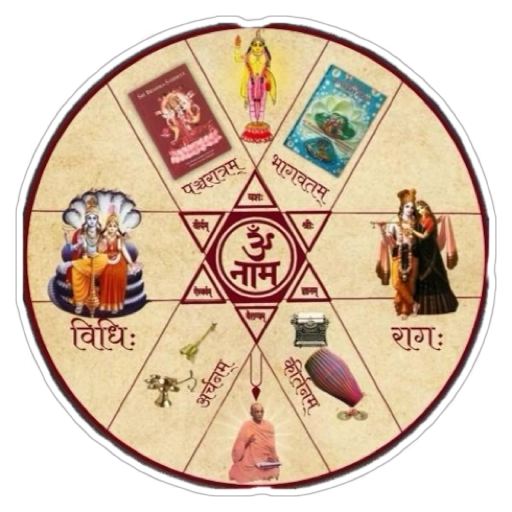
In another sense, it is true – we should know that our guru has given us everything. Our guru has given us the *mahā-mantra *and everything is in the Holy Name. Nāma, guṇa, rūpa, līlā – the qualities, the form and the pastimes of Kṛṣṇa manifest through the Holy Name. It is also said that everything is in the syllable oṁ, and everything is in the first verse of the Śrīmad Bhāgavatam. But how will we unpack it? That’s the problem. Actually, the guru has given us the key to unpack it – he has told us what type of devotee to associate with, what type of devotee to inquire from, what is a śikṣā-guru etc. He has given us all these things. The only inability is with us.
At first, the neophyte may think, āmāra guru, jagat-guru – “My guru is the best!” He may think that he doesn’t need anyone else. “It’s just me and my guru!” This is actually a defect. By thinking in this way, we cut themselves off from divine intervention. We should always think of ourselves as students with a prime necessity. We come from the class of most fallen souls, so how is it that we suddenly have no necessity? Just by chanting the Holy Name for a few years, can we now say that we don’t need anything or anyone else and we are totally independent? That is not possible. The higher understanding is that we are eternally students of the truth. If we are fortunate, we will come to know that just as Kṛṣṇa is not alone, our guru is also not alone. He has his eternal associates, his eternal friends, his eternal godbrothers. He has *his *guru also. Our guru has given us everything – and he has also given us those agents who have come to help us go further.
We never heard Prabhupāda, Śrīla Śrīdhara Mahārāja, Śrīla Purī Mahārāja or any of the disciples of Sarasvatī Ṭhākura saying, “You only need your guru. You don’t need anyone else!” So what makes us so special? Why are we so different? Kṛṣṇa consciousness is a living thing – it’s not stagnant. We shouldn’t be like a car in neutral, just revving the engine and going nowhere. The way is forward. When we actually hear from our guru then the result is realisation – jñāna and then vijñāna. All our ācāryas heard from their gurus and had their own realisations and passed that on to their disciples. That is how the paramparā works. It’s a dynamic thing. But just to say, “Our guru gave us everything so we don’t need to hear from anyone else” means you don’t know how the paramparā system works. If you have no substantial realisation, it means the wheels are turning, but you are going nowhere. You are just ‘burning rubber.’ You may be going through the external motions of devotion, but you are not advancing.
I think sometimes devotees forget that our bhāgavata-paramparā is primarily a śikṣā-paramparā. We lay more emphasis on *śikśā, not dīkṣā. If the principle of śikṣā-guru *was actually understood properly, then there wouldn’t be so much institutionalism and fanaticism. Generally, when devotees make the statement “Our guru gave us everything” there is no proper understanding there. It is just a fanatical jingoism. Having achieved a certain level of success, institutionalism sets in, and then the institution says, “Don’t go outside the institution! The bogeyman will get you!” They tell you, “No, you can only unpack this within the institution!” But Prabhupāda never writes like that. In fact, Śrīla Bhaktisiddhānta Sarasvatī Ṭhākura explains that when the institution takes over, the transcendental nature is lost, and it just becomes a mundane organisation.
Kṛṣṇa is not impotent. He can send as many representatives to help us as He deems fit, but if we reject those representatives out of pride or because we have some misconceived institutional idea about chastity, then we will be the loser. It is like the story of the man who was in a flood, sitting on the roof of his house. A boat came and they told him to get on, but he said, “No, no. God will save me!” So the boat left. Then the water rose higher and a helicopter came and threw down a rope ladder, but the man said, “No, no. God will save me!” So the helicopter left. Then the water got higher and finally the man drowned. When he got to heaven, he was angry and he told God, “I had so much faith in you and you let me drown!” And God replied, “Hey, first I sent a boat, then I sent a helicopter…”
We need all the help we can get and if Kṛṣṇa sends His agents, we can’t neglect that. In kṛṣṇa-līlā, there is the story of the yajñika–brāhmaṇas who rejected Kṛṣṇa due to their pride, but their wives were innocent and understood who Kṛṣṇa and Balarāma were, so they received Their mercy. Then later, the brāhmaṇas lamented, “Oh, we were so foolish! We could not understand who You were! We were proud of our so-called knowledge and status.”
🔗 Read More On: Questions and Answers on the Guru Principle
Get a copy of Guru Tattva Prakāśikā – Questions and Answers on the Guru Principle
You can purchase a deluxe softcover and kindle edition of Swami B.G. Narasiṅgha Mahārāja’s ‘Guru Tattva Prakāśikā: Questions and Answers on the Guru Principle’ by following the buy links. Alternatively you can get in touch via email to order globally. Email us [email protected]
Buy on AmazonBuy Kindle Edition
Video Overview of
‘Questions and Answers on the Guru Principle’