
Kovvur
Kovvur
This article ‘Kovvur,’ was written by Śrīla Bhakti Rakṣaka Śrīdhara Deva Gosvāmī, prior to his acceptance of sannyāsa, for the daily Gauḍīya Maṭha newspaper, Nadīyā Prakāśa, and published on 4th September 1930 (Vol.5, Issue 3). This article gives some history of Kovvur, the place where Mahāprabhu and Rāmānanda Rāya first met in South India. Śrīla Śrīdhara Mahārāja was instrumental in discovering this place – so much so, that Sarasvatī Ṭhākura converted his name from Rāmendra Sundara Dāsa to Rāmānanda Dāsa. Two months after writing this article, he accepted sannyāsa. This article has been translated into English for the first time.
Kovvur (pronounced ‘Kowur’) is the name of a newly arising city situated on the western bank of the Godāvarī River in Andhra Pradesh in the southern states, adjacent to the ancient city of Rājamahendrī (Rajahmundry). In Rājamahendrī lies the famous ghāṭa known as Koṭi-liṅga Kṣetra (‘the place of a million śiva-liṅgas’). It has been heard that at one time, millions of śiva-liṅgams were installed there. Even now, many liṅgams can be seen at that place. On the exact opposite side of this Koṭi-liṅga Kṣetra, towards the west of the Godāvarī, lies the renowned Goṣpada-Kṣetra, situated on the eastern boundary of Kovvur.

This Goṣpada-tīrtha is also known as Puṣkara-tīrtha. Every twelve years, a grand festival is held here in the month of Bhādra. People who live religious lives immediately assemble at this place from all over Bhārata, to perform acts of merit such as bathing etc., and offer large amounts of gold and silver into the holy waters of the Godāvarī. This festival will be held again in the month of Bhādra in the upcoming year 1932 AD. The local residents commonly refer to this festival as ‘Puṣkara.’
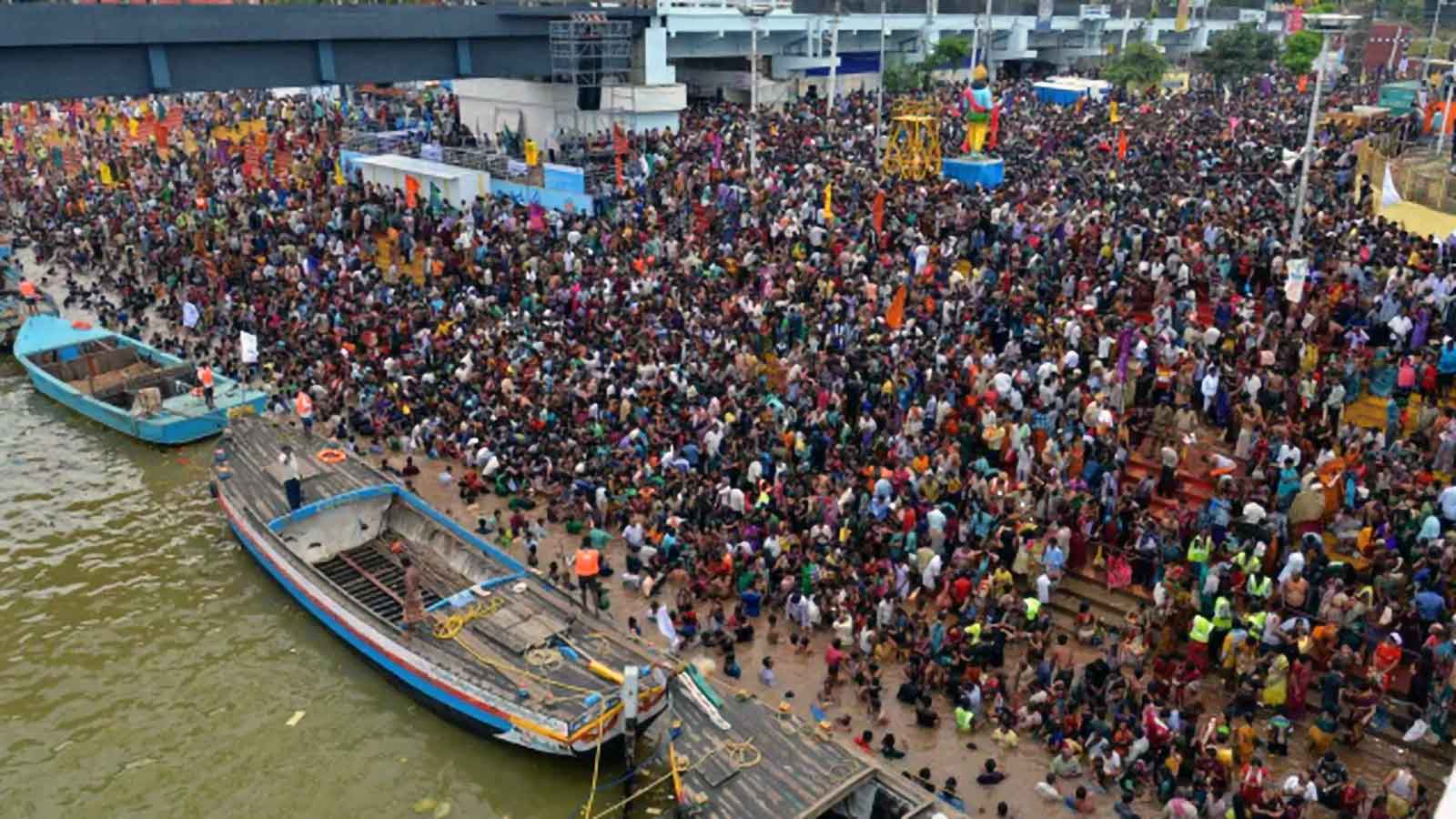
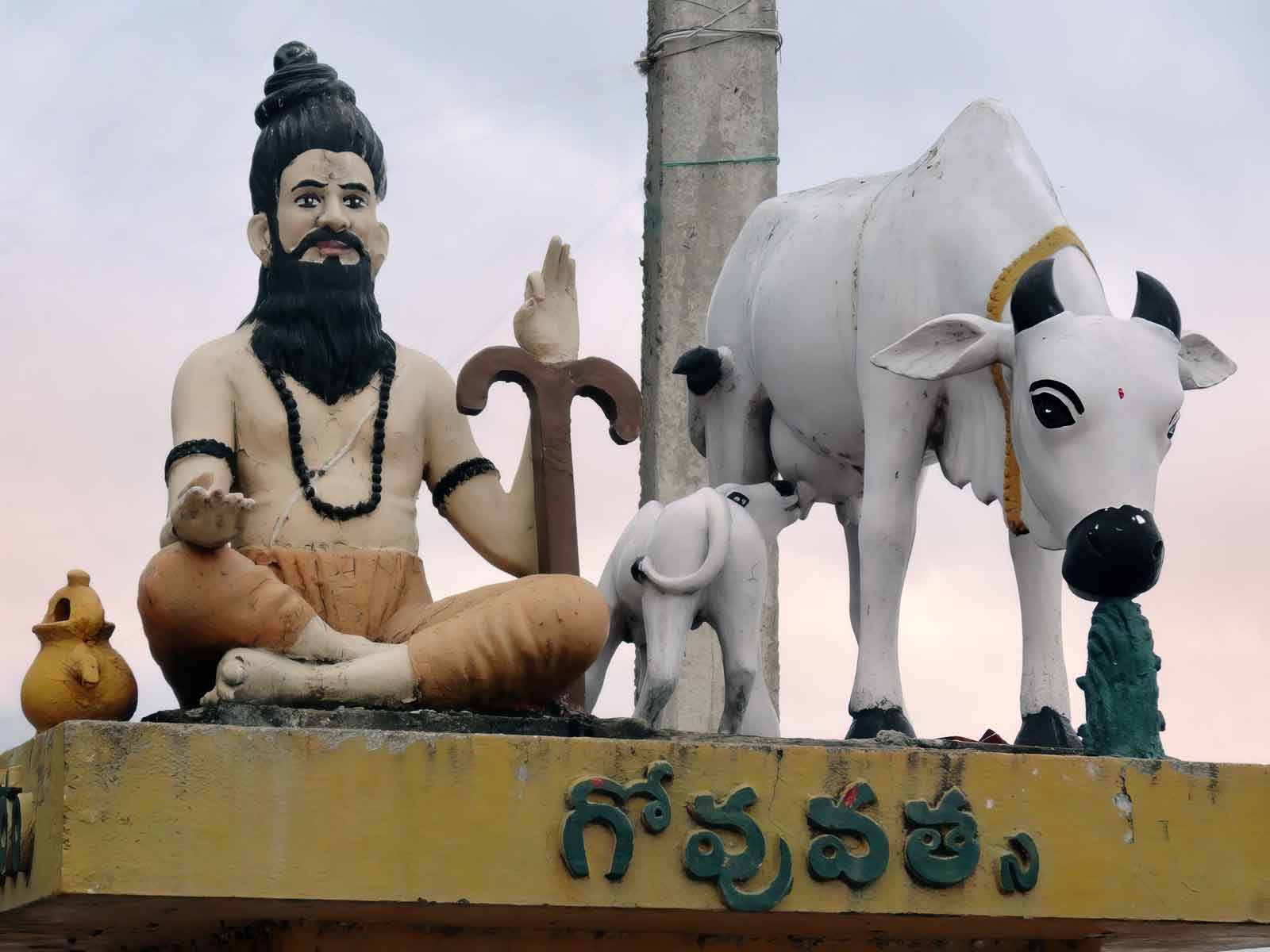
According to the opinion of linguists, the word kovvur has its origin in the Andhra language and is derived from the Sanskrit word goṣpada. There is a popular legend related to Goṣpada kṣetra. In the Satya-yuga, Gautama Ṛṣi performed austerities here before establishing his āśrama. A calf often caused disturbances by coming to his āśrama, and one day, when the sage was annoyed, he threw a blade of grass at the calf, causing it to immediately give up its life on impact. Later, when the local people became aware of this incident and apprehended him as a cow-killer, that best of sages, by the power of his own penances, brought down the Godāvarī and revived the dead calf with its nectarean waters. Consequently, the place became famous as Goṣpada. The peculiarity of this place is that the marks of goṣa-padas (cow’s hoof-prints) are always seen here. Even during the river’s changing course or flooding, they do not disappear. At this place on the riverbed of the Godāvarī, I directly saw small and large markings of cow’s hoof-prints. The name Kovvur originates from the Andhra language through the word Goṣpada, and this place is very ancient.
A very old temple of Gopāla-jiu exists at this place, and adjacent to it, there is a temple of Vajrāṅga-jiu (Hanumān). This may be the place where it is mentioned in that sacred book written by Śrīla Kavirāja Gosvāmi, the guru of transcendental literature, that Śrīman Mahāprabhu took darśana of Śrī Hanumān when he took leave of Vidyāpura.
The fact that the present Kovvur and Rājamahendrī were there at the time of Śrīman Mahāprabhu’s arrival in the state, or shortly before, is evidenced by the plaques preserved at the premises of the Rājamahendrī Government Arts College and the ancient Madana-Gopāla temple of the said city – it was converted into a mosque during the time of Muhammad Tuglak, and considerable information can be gleaned from its inscriptions, as well as from two books called Kāśī-khaṇḍam and Bhīmeśvara Purāṇam written by the famous poet Śrīnātha Bhaṭṭa of Andhra.
The village of Vijayeśvaram is located to the south on the banks of the Godāvarī, three miles from here. This Vijayeśvaram is pronounced as ‘Vijyeśvaram’ in the dialect of the Andhra province. Probably during Śrī Caitanyadeva’s time, this Vijyeśvaram or Vidyeśvaram was called by the name Vidyāpuram or Vidyānagaram. Especially, the location of the government administrator of Rājamahendrī was possibly close to Rājamahendrī. Some of the local followers of Śrī Caitanya’s philosophy are of the opinion that this Vijayeśvaram is the Vidyānagara of Rāya Rāmānanda Prabhu. At the time of Śrīman Mahāprabhu, Vijayeśvaram may have extended up to Goṣpada. Alternatively, if it was not too far, Śrī Rāya Rāmānanda Prabhu could have come without using a palanquin. Since he came with thousands of Vedic brāhmaṇas, he must have come to a famous ghāṭa or for a special occasion – such an assumption may not be entirely unreasonable.
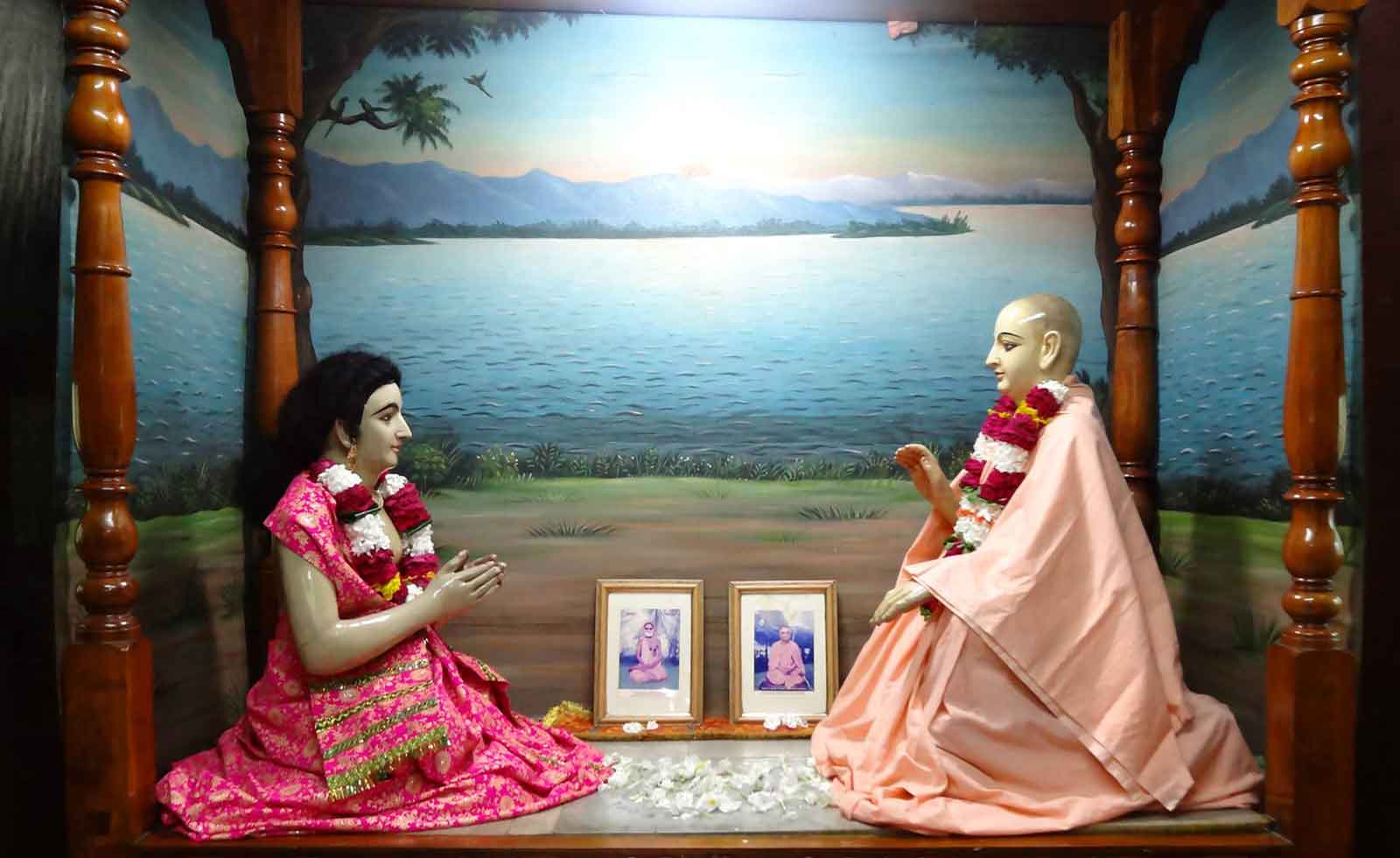
On the other hand, Kovvur’s Goṣpada Ghāṭa and Rājamahendrī’s Koṭi-Liṅga Ghāṭa are facing each other on both banks of the Godāvarī, therefore it is possible that another ghāṭa was between the two famous ancient ghāṭas. Therefore, Śrī Śrī Caitanyadeva crossed the Godāvarī, took a bath at Goṣpada Ghāṭa and performed śrī-kṛṣṇa-kīrtana near the river, and at that place, Śrī Rāya Rāmānanda Prabhu met Śrī Śrīman Mahāprabhu for the first time.
At the last section of this Goṣpada Ghāṭa, the establishment of Śrī Rāmānanda Gauḍīya Maṭha is going on. For this purpose, a merchant from Rājamahendrī named Ramachandra Rao has donated about ten acres of land. The Godāvarī flows within a range of 30-40 yards near this land, with only a government dam obstructing its flow. Śrī Rāmānanda Gauḍīya Maṭha is manifesting due to the service endeavours of Śrīpāda Bhakti Hṛdaya Vana Mahārāja.


I have already said that the current Kovvur is an emerging city. There is an M.S.M (Madras and Southern Mahratta) railway station here. The necessity for post offices, police stations, administrative centres etc. for this town is increasing day by day. Especially due to the presence of the larger and older city of Rājamahendrī which is located on the other side, many respectable people have retired there to live away from the noise of the city. Here, there is an English high school and a Sanskrit college with a student hostel attached. The servants of Śrī Gauḍīya Maṭha are also present in this college. The local people show special respect to Śrī Śrī Caitanyadeva.
Śrī Rāmānanda Deva Śarma
(Vidyā-rañjana, Bhakti-śāstri, B.A.), Kovvur
August 30th, 1930
(Translated into English by Swami B.V. Giri)
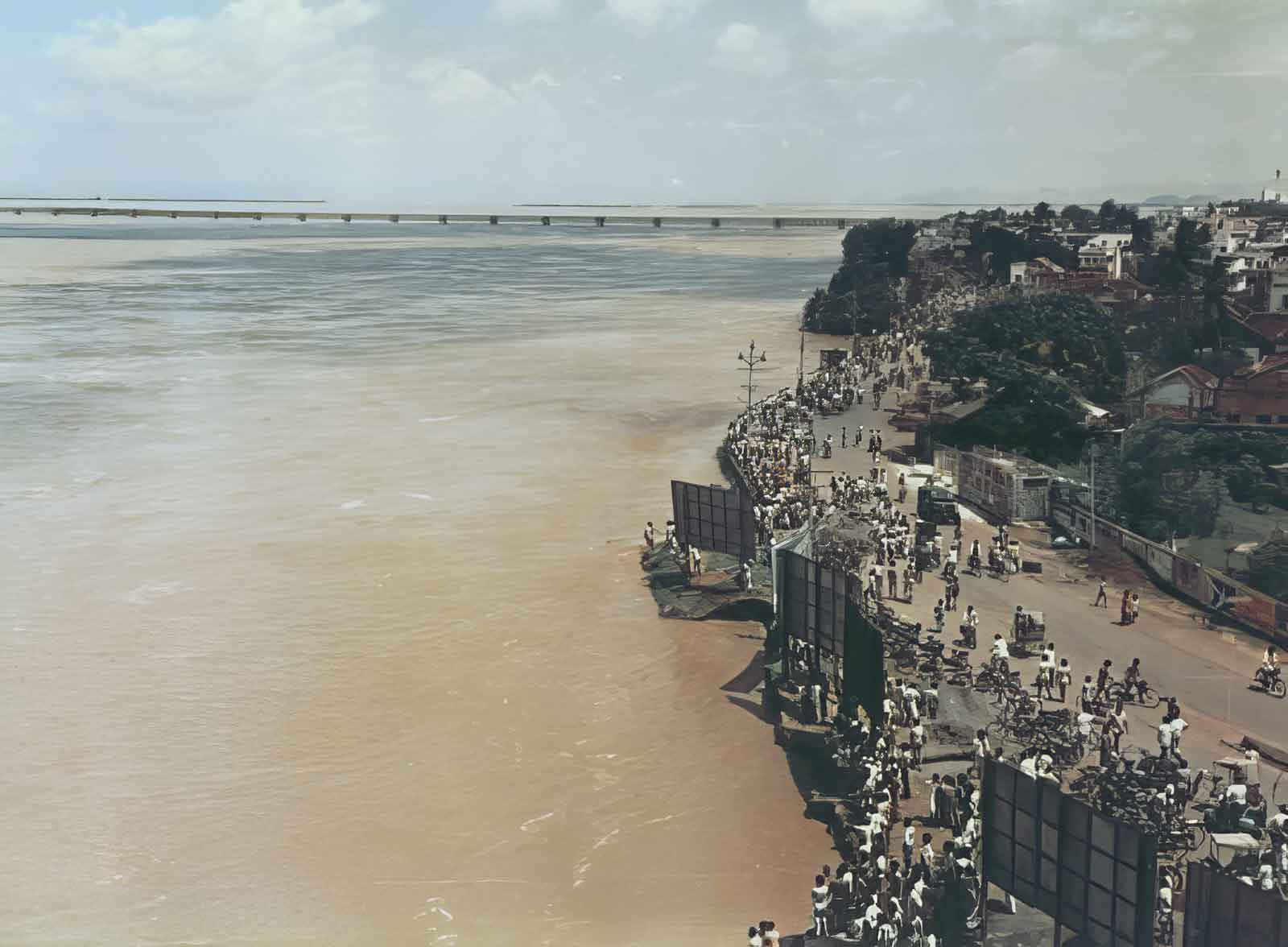
(An Old Photo of Goṣpada Ghāṭa on the Godāvarī River)
Related Articles and Books
📚 Pilgrimage With Swami Narasiṅgha Series 📚 The Adbhūta Mandira Series Śrī Govardhana Pūjā by Śrīla Bhakti Rakṣaka Śrīdhara Deva Gosvāmī The Vṛndāvana Express and the Navadvīpa Special by Śrīla Bhakti Rakṣaka Śrīdhara Deva Gosvāmī Kovvur by Śrīla B.R. Śrīdhara Mahārāja Vraja Bhāva by Śrīla Bhakti Gaurava Narasiṅgha Mahārāja The Worship of Govardhana by Śrīla Bhakti Gaurava Narasiṅgha Mahārāja Dāsa Gosvāmī and the Unique Position of Govardhana by Śrīla Bhakti Gaurava Narasiṅgha Mahārāja Ācāryas at Śrī Śrī Rādhā-Dāmodara Temple, Vṛndāvana by Śrīla Bhakti Gaurava Narasiṅgha Mahārāja Pilgrimage to Vṛndāvana-dhāma by Śrīla Bhakti Gaurava Narasiṅgha Mahārāja The Appearance of Rādhā-kuṇḍa by Śrīla Bhakti Gaurava Narasiṅgha Mahārāja Śrī Śrī Gaura Rādhā-Mādhava & the Temple of Misunderstanding by Śrīla Bhakti Gaurava Narasiṅgha Mahārāja The Adbhūta Mandira and Bhaktivinoda’s Vision by Śrīla Bhakti Gaurava Narasiṅgha Mahārāja Māyāpura and the Adbhūta Mandira by Śrīla Bhakti Gaurava Narasiṅgha Mahārāja The Temple of Understanding by Śrīla Bhakti Gaurava Narasiṅgha Mahārāja
Further Reading from the Bhaktivinoda Institute
Rādhā-kuṇḍa and Śyāma-kuṇḍa by Śrīla Bhaktivinoda Ṭhākura Vṛndāvana by Śrīla Bhaktivinoda Ṭhākura Puratana Gañja of Śrīdhāma Navadvīpa by Śrīla Bhaktivinoda Ṭhākura What is Presently Called Aparādha Bhañjanera Pāṭa in Kuliyā by Śrīla Bhaktivinoda Ṭhākura Where is Kuliyā Aparādha-Bhañjana Pāṭa? by Śrīla Bhaktivinoda Ṭhākura What Has Happened in Śrī Māyāpura? by Śrīla Bhaktivinoda Ṭhākura Śrī Sīmantadvīpa by Śrīla Bhaktivinoda Ṭhākura The Place of Śrīla Bhāgavatācārya by Śrīla Bhaktivinoda Ṭhākura Śrī Śrī Navadvīpa Dhāma by Śrīla Bhaktivinoda Ṭhākura The Place of Śrī Nakula Brahmacārī by Śrīla Bhaktivinoda Ṭhākura Śrīpāṭa Denuḍa by Śrīla Bhaktivinoda Ṭhākura Śrīdhāma Māyāpura by Śrīla Bhaktivinoda Ṭhākura The Temple of Śrī Śrī Jagannāthadeva by Śrīla Bhaktivinoda Ṭhākura The Temple of Jagannath at Puri by Śrīla Bhaktivinoda Ṭhākura