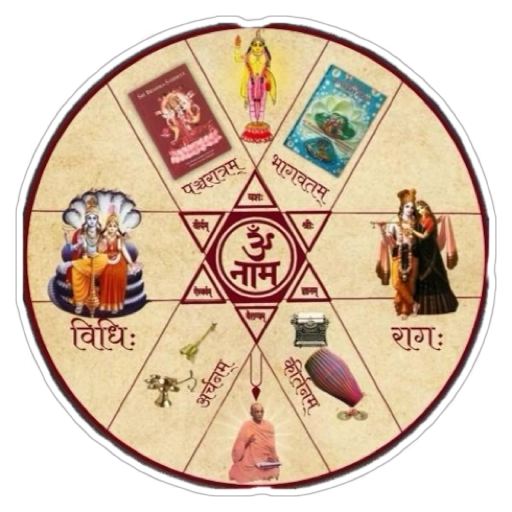
Śrī Artha Pañcaka (Five Essential Principles)
Śrī Artha Pañcaka (Five Essential Principles)
Overview
This overview of Śrī Pillai Lokācārya’s ‘Artha Pañcaka’ (Five Essential Principles) by Śrīla Bhaktivinoda Ṭhākura was first published In Sajjana Toṣaṇī, Vol.7, Issue 3 in 1895. Composed in the 13th century, this concise work on Śrī Vaiṣṇava siddhānta outlines five key philosophical principles that a jīva must grasp in order to progress in their spiritual journey.
by Śrīla Bhaktivinoda Ṭhākura
(translated by Swami B.V. Giri)
Śrī Lokācārya Mahāśaya, a grand-disciple of Śrimad Rāmānuja Svāmī wrote this book. This Artha Pañcaka is absolutely essential to awaken knowledge of reality (tattva–jñāna) in the worldly jīvas. Sva-svarūpa (the inherent nature of the jīva), para-svarūpa (the inherent nature of Īśvara), puruṣārtha-svarūpa (the inherent nature of the supreme goal of the jīva), upāya-svarūpa (the inherent nature of the means of achieving that goal), and virodhī-svarūpa (the nature of those things that are averse) – the knowledge and descriptions of these five concepts have been written here.
(A) The jīva’s sva-svarūpa (the inherent nature of the jīva):
(1) Nitya (eternal)
(2) Mukta (liberated)
(3) Baddha (bound)
(4) Kevala (oneness)
(5) Mumukṣu (desiring liberation)
(B) The Supreme Lord’s para-svārūpa (the inherent nature of Īśvara):
(1) Para (the supreme form of the Lord)
(2) Vyūha (His expansions as the Catur-vyūha)
(3) Vibhava (His avatāras)
(4) Antaryāmī (His localised aspect within each jīva)
(5) Arcāvatāra (His Deity form)
(C) Puruṣārtha Svarūpa (the inherent nature of the supreme goal of the jīva)
(1) Dharma (religious observances)
(2) Artha (Accumulation of wealth)
(3) Kāma (fulfilment of desires)
(4) Ātmānubhava (self-realisation)
(5) Bhagavad-anubhava (realisation of Bhagavān)
(D) Upāya-svarūpa (the inherent nature of the means of achieving that goal)
(1) Karma (worldly activities performed according to Vedic injunctions)
(2) Jñāna (knowledge)
(3) Bhakti (devotion)
(4) Prapatti (surrender)
(5) Ācāryābhimāna (accepting an ācārya)
(E) Virodhī-svarūpa (the nature of those things that are averse)
(1) Svarūpa-virodhī (Things that are averse to one’s inherent nature)
(2) Paratva-virodhī (Things that are averse to the Supreme)
(3) Puruṣārtha-virodhī (Things that are averse to the aim of life)
(4) Upāya-virodhī (Things that are averse to achieving the aim of life)
(5) Prāpya-virodhī (Things that are averse to the supreme goal of life)
********
(A) The jīva’s sva-svarūpa (The inherent nature of the jīva):
-
Nitya-jīva – The eternal entourage including Viṣvaksena etc, who are always free from the faults connected with saṁsāra, who enjoy those things that are favourable to Bhagavān, who are appointed by the Lord of Vaikuṇṭha, who are capable of creation, maintenance and annihilation, and who are constantly in a state of serving the Supreme.
-
Mukta-jīva – The fully satisfied and blissful munis present in Vaikuṇṭha whose contaminations in relation to matter have ceased due to the mercy of Bhagavān, who are jubilant in the bliss of Bhagavān, and who offer prayers to the Lord.
-
Baddha-jīva – Those conscious beings who are bound in saṁsāra and averse to Bhagavān, who are composed of the five gross elements who experience temporary pleasure and pain, who are unqualified to come in contact with realisation of the ātmā, who are impure, ignorant, who possess other conceptions and opposite ideologies born from the misconception that the physical body is the self, who are engaged in maintaining their body, who perform acts which are not practiced in varṇāśrama-dharma, who are violent to other creatures, and who endeavour to steal the wives and property of others.
-
Kevala-jīva – The kevala-jīva is alone. Suffering from hunger and thirst, He devours himself in the absence of anything else. Only a jīva who has attained kaivalya (oneness) through yoga etc. is a kevala-jīva.
-
Mumukṣu-jīva – The mumukṣu-jīva, being scorched by the great forest-fire of saṁsāra, becomes free from the miseries of birth and death through jñāna and achieves discernment of the ātmā. He knows that the inherent nature of matter is that it is an inferior substance and the refuge of distress. He knows that the ātmā is a superior tattva to matter and is self-illuminating, self-satisified, and possesses an eternal, transcendental nature (aprākṛta–svarūpa). Because they are incapable of achieving the all-blissful Paramātmā, they consider that their misery must be due to previously experiencing the negligible rasa of the material world. These practitioners of self-realisation, who consider that the only intrinsic result of adherence to jñāna-yoga is realisation of the ātmā, remain in this world until they achieve a perfected transcendental body. The two different kinds of mumukṣus are upāsakas (those who engage in worship) and prapannas (those who are surrendered).
B) The Supreme Lord’s para-svārūpa (The inherent nature of Īśvara):
-
Para-tattva – The word ‘para’ refers to Parameśvara. He is the eternally present, primeval and effulgent Para-Vāsudeva.
-
Vyūha-tattva – Saṅkarṣaṇa, Pradyumna and Aniruddha who perform creation, maintenance and annihilation.
-
Vibhava-tattva – Avatāras such as Rāma, Kṛṣṇa etc.
-
Antaryāmī-tattva – This is of two kinds: Paramātmā who enters within the consciousness of His servants, and the supremely attractive Nārāyaṇa who, accompanied by the ever-beautiful Lakṣmī, considers entering into the consciousness of those persons who think, “Vāsudeva is my very life!”
-
Arcāvatāra – The worshippable Deity-form who possesses names and forms desired by His servants. He is omniscient, yet He seems to be insentient. He is endowed with all potencies, yet He seems to be powerless. He fulfils all desires, yet He seems to be dependent. He is the protector, yet it seems He is being protected. Although He Himself is the Master, it seems that He is present in the temple simply as the master of the devotee.
C) Puruṣārtha-svarūpa (the inherent nature of the supreme goal of the jīva)
-
Dharma – Dharma is the name of that function which is the only means of preserving living beings.
-
Artha – Accumulating wealth and property in accordance with varṇāśrama, and with a pious mindset, spending it on activities connected to the Devatās and Pitṛs, and for those things that protect other living entities after careful deliberation on place, time and circumstance is called artha.
-
Kāma – Kāma is of two types: in relation to this world, and in relation to the afterlife. Desires for happiness from sensory experience arising from sound etc are things such as father, mother, jewels, wealth, grain, food, drink, wife, sons, friends, animals, home, land, sandalwood, flowers, betel, clothing etc
-
Ātmānubhava – The mere experience of cessation of suffering is called ātmānubhāva (self-realisation). This alone is a kind of liberation.
-
Bhagavad-ānubhava – Bhagavad-anubhāva (realisation of Bhagavān) alone is the highest goal of human life (parama puruṣārtha), and is the characteristic for experiencing mokṣa. Upon the destruction of prārabdha-karma (unmanifest karmika results) and both puṇya and pāpa, when one becomes free from the sixfold transformations – asti (material existence), jāyate (birth), pariṇamate (transformation), vivardhate (growth), apakṣīyate (decline), and vinaśyati (destruction) – which are associated with the tapa-traya (threefold miseries), then, having shed the gross body that, due to obscuring the true nature of Bhagavān, produces contrary knowledge and nourishes saṁsāra, the ātmā exits by piercing through the top of the skull through the suṣumṇā-nāḍī, and, travelling on the path of light, it enters the higher realms. There, after bathing in the Virajā River, the subtle body and all residual desires are removed, and by the touch of the hand of the Lord’s personal form, all afflictions are dispelled forever. Then, having attained a transcendental form which is of the nature of śuddha-sattva and composed of the pañcopaniṣad,*the source of knowledge and bliss, he is adorned with a crown and eternally resides in a jewelled pavilion among the immortals, eternally experiencing the Lord of the spiritual sky, who is present there along with His eternal consorts Bhū, Śrī, and Līlā, and he remains engaged in His eternal servic
*Translator’s Note: The pañcopaniṣad-āmnāya is explained in Pañcarātrika texts such as the Parama Saṁhitā. The Lord, and everything connected to Him, is not comprised of the pañca-bhūtas (five material elements), but is made up of the following five divine qualities:
- Parameṣṭhi: Associated with the sense of hearing, representing the Lord’s aspect as the supreme abode.
- Pumān: Linked to the sense of touch, signifying the Lord as the Supreme Person (Puruṣa).
- Viśva: Connected with sight or light, indicating the Lord’s immanence in the universe.
- Nivṛtti: Related to taste, symbolising the Lord’s aspect of detachment or withdrawal.
- Sarva: Associated with smell, representing the Lord as the all-encompassing totality.
D) Upāya-svarūpa (The inherent nature of the means of achieving that goal)
-
Karma – yajñas, charity, austerities, meditation, daily prayers such as sandhyā-vandana, the five great sacrifices (pañca-mahāyajña), agni-hotra, pilgrimage, residence in holy places , observances such as kṛcchra and cāndrāyaṇa, bathing in holy rivers, vrata**s, the observance of cāturmāsya, subsisting on fruits and roots, study of śāstra, the worship of Bhagavān, chanting japa, offering water to the Devas and Pitṛs (tarpaṇa), voluntary physical austerities, acts leading to the destruction of pāpa – such activities that engage sound and the other senses may be termed as karma. Aṣṭāṅga-yoga consisting of yama, niyama, āsana, prāṇāyāma, pratyāhāra, dhāraṇā, dhyāna, and samādhi are also considered to be divisions of karma.
-
Jñāna – Deliberation on ātma-tattva (self-realisation) is called jñāna. This jñāna occupies a primary place among the divine opulences that assist yoga. It involves the realisation of the Supreme Lord of all things, who resides in the lotus of the heart and in the solar orb, along with Lakṣmī, bearing the lotus, conch, discus, and mace. This latter form of jñāna serves as an assistant to bhakti-yoga.
-
Bhakti – Bhakti is the name for the suitable mental disposition that can bring about love (prīti), characterised by an unbroken flow of remembrance of Bhagavān, like a continuous stream of oil. The nature of bhakti is such that it becomes capable of expanding the ātmā’s restrictions through the practice of sādhana and sādhya, which serve as the means to bring about the cessation of prārabdha-karma.
4)Prapatti – Bhakti, being of the nature to attain the desired result (upāya-svarūpa), creates a mood towards the Object of worship which takes the form of Bhagavān realisation – that is prapatti. Prapatti is of two types – ārta-rūpa-prapatti (surrender in the form of distress) and dṛpta-rūpa-prapatti (surrender out of duty). When knowledge arises through the study of śāstra and the instructions of the ācārya, by the causeless grace of Bhagavān, then realisation of Bhagavān occurs. Then, when the body and environment etc, which are opposed to realisation of Bhagavān, become unbearable, reflecting upon Śrī Veṅkaṭanātha’s* power to cease birth in the womb, old age, disease, death, etc., and with the statement, “I am a servant with no other refuge,” surrendering to Śrī Veṅkaṭanātha, bowing down, expressing one’s own distress, and becoming exclusively devoted – this is called ārta-rūpa-prapatti.
Dṛpta-rūpa-prapatti is as follows – a dutiful and surrendered person who, being detached from both Svarga and Naraka, desires to attain Bhagavān, and through the instruction of the ācārya, accepts the process to restrain opposing tendencies, and engages in vocally, mentally, and physically performing varṇāśrama duties prescribed by the Vedas as service to Bhagavān. Having realised Bhagavān’s position as the independent controller, regulator, master, in-dweller, pervader, sustainer, protector, enjoyer, omniscient, omnipotent, complete, and self-satisfied – and one’s own position as dependent, regulated, owned, the possessor of a material body, pervaded, sustained, protected, enjoyed, ignorant, powerless, and incomplete – one seeks the mercy of the Supreme.
*****Translator’s Note: Veṅkaṭanātha means ‘the Lord of the Veṅkaṭa Hills,’ also known as Tirupati Bālājī in Andhra Pradesh. This is the name that Pillai Lokācārya, the original author of Artha Pañcaka, has used to denote the Lord.
- Ācāryābhimāna – “I am weak and destitute!” Expressing one’s sorrow to a qualified ācārya of Bhagavān, and engaging in bhagavat-bhajana in a firm relationship with him — this is called ācāryābhimāna.
(E) Virodhī-svarūpa (The nature of those things that are averse)
-
Svarūpa-virodhī – Dehātma-abhimāna, that is, identifying the self with this material body, not understanding oneself as a servant of Bhagavān, and believing in one’s own independence – these are some examples of svarūpa-virodhī.
-
Paratva-virodhī – Considering other Devas to be the Supreme Truth, accepting them to be equal to the Lord, attributing the powers of the Lord to lesser Devas, the perception of human limitations in avatāras, and attributing powerlessness to the form of the Deity – these are all examples of paratva-virodhī.
-
Puruṣārtha-virodhī – Reluctance to render service to Bhagavān, and internally desiring other goals of human life, such as enjoyment (bhukti) and liberation (mukti) – these two are puruṣārtha-virodhī.
-
Upāya-virodhī – Accepting alternative processes, considering the process to be insignificant,* and considering the true goal to be too difficult to achieve – these three are upāya-virodhī.
*****Translator’s Note: Some commentators on the Artha Pañcaka have explained this point as considering the process of surrender to the Lord to be too easy to attain the desired results. In other words, such persons think that the path of bhakti is too simplistic – the goal must be something far more complicated.
- Prāpti-virodhī – Strong attachment to the body born of prārabdha-karma, approaching the guru without repentance, offending Bhagavān, and grave offenses against others – these are prāpti-virodhī.
When knowledge of these five concepts arises, the person desiring liberation should, until the attainment of mokṣa, accept food and clothing appropriate to their varṇa and āśrama, offering all objects to Bhagavān and sustaining their life through the acceptance of prasāda. One should act according to the instruction of the guru who generates knowledge of reality (tattva-jñāna). One should always express humility before the Lord, confess one’s ignorance to the ācārya, acknowledge one’s subordination to the Vaiṣṇava, and show indifference toward worldly people. One should maintain persistence in attaining what is to be attained, fear that which is opposed to bhakti, show disinterest in inferior matters, dispassion toward one’s own body, and attachment to preserving knowledge of one’s true nature (svarūpa-jñāna).
According to the Śrīmad Gauḍīya philosophy, all these instructions are accepted in consideration of the awe-filled mood of dāsya-rasa. The servants of Śrīman Mahāprabhu are aware of the subtle distinction between dāsya-rasa to Nārāyaṇa and dāsya-rasa with its foundation in mādhurya-rasa to Kṛṣṇa. Even in kṛṣṇa-dāsya-rasa, if the instructions in the Artha Pañcaka are slightly adjusted according to bhāva, there is no fault at all. When the mood of viśrambha (familiarity) arises in dāsya-rasa, it transforms into sakhya-rasa. When sneha (affection) is added to this, it becomes vātsalya-rasa. In this way, when informality and self-surrender appear, then the madhura-bhāva taught by Mahāprabhu arises. Therefore, understanding all the conclusions of Śrīmad Rāmānuja Svāmī to be the foundation of our Gauḍīya temple of prema, we offer our daṇḍavats to him again and again.