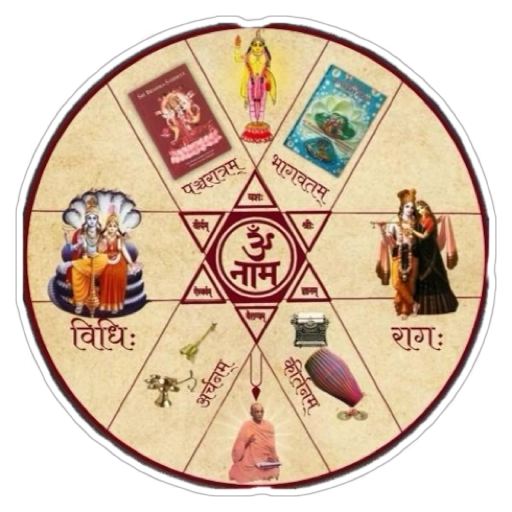
Śrī Daśa-Mūla (The Ten Foundational Principles)
Śrī Daśa-Mūla (The Ten Foundational Principles)
Overview
The Daśa-Mūla is an important contribution of Śrīla Bhaktivinoda Ṭhākura to the Gauḍīya Vaiṣṇava sampradāya. These ten foundational principles give a summary of the teachings of Śrī Caitanya Mahāprabhu as found in Sri Caitanya-caritāmṛta. Below is a short explanation and history of the Daśa-Mūla followed by the Sanskrit verses originally composed by Bhaktivinoda Ṭhākura delineating each of the ten topics.
by Śrīla Bhaktivinoda Ṭhākura
(translated by Swami B.V. Giri)
Śrī Daśa-Mūla
(The Ten Foundational Principles)
Preface by the Translator
In Ayurveda, daśa-mūla refers to a tonic comprised of the roots of ten medicinal plants that cure numerous health conditions. Although there is a plethora of diseases in the world, the greatest ailment the jīva suffers from is avidyā, or ignorance. In order to cure this long-standing disorder, Śrī Caitanyadeva, during His ācārya-līlā, unveiled ten fundamental philosophical concepts which were further revealed through His dearmost associate, Śrīla Bhaktivinoda Ṭhākura.
The Ṭhākura composed thirteen Sanskrit ślokas, the first of which reveals the pramāṇa (evidence), i.e. the Vedas as the ultimate pramāṇa, and the following ślokas reveal the prameyas (that which is proven).
The history of Śrīla Bhaktivinoda Ṭhākura’s Daśa-Mūla begins with his publication of Vaiṣṇava Siddhānta Mālā in 1888. He based this book on the nine prameyas (subject matters) given by Śrī Baladeva Vidyābhūṣaṇa in his Prameya Ratnāvalī (Baladeva’s nine prameyas have their origins in a verse composed by the famous Madhva scholar, Vyāsa Tīrtha).
In 1892, the Ṭhākura wrote Śrīman Mahāprabhur Śikṣā (‘The Teachings of Śrīman Mahāprabhu’) where he introduced the concept of the Daśa-Mūla for the first time as the ten fundamental teachings of Śrī Caitanya. In this book, we find what he referred to as the siddhānta-śloka (āmnāyaḥ prāha tattvaṁ’) which eventually became the first verse of the thirteen Sanskrit ślokas defining the Daśa-Mūla.
In 1893, Ṭhākura Bhaktivinoda wrote one of his most famous works, Jaiva Dharma wherein, through Chapters 13 to 22, he introduced thirteen Sanskrit ślokas delineating each of the prameyas. These verses were used by Bhaktivinoda in subsequent works.
In 1896, he published Gaurāṅga Līlā Smaraṇa Maṅgala Stotram – a synopsis of the pastimes and teachings of Śrī Caitanyadeva. This work of 104 verses included the thirteen ślokas of the Daśa-Mūla, along with a Sanskrit commentary, the Vikāśiṇī Ṭīkā, by Bhaktivinoda Ṭhākura’s associate, Śrī Śitikaṇṭha Vācaspati.
In 1897, Bhaktivinoda penned a long article in Volume 8, Issue 9 of Sajjana Toṣaṇī entitled Daśa-Mūla Niryasa (‘The Essence of the Daśa-Mūla’) giving a brief summary of the ten topics.
In Hari-nāma Cintāmaṇi, which he published in 1900, he gave a short explanation in Chapter 7 of the Daśa-Mūla. Like the rest of Hari-nāma Cintāmaṇi, this description was written in Bengali verse.
These ten fundamental principles permeate all sat-śāstras (bona fide spiritual literature) and Śrīla Bhaktivinoda selected verses from the Upaniṣads, Bhagavad-gītā, Śrīmad Bhāgavatam and Caitanya-caritāmṛta to demonstrate this. These ślokas remained unpublished until a series of hand-written manuscripts were discovered in 1940 by the disciples of Śrīla Bhaktisiddhānta Sarasvatī Ṭhākura. Subsequently, they were published in the monthly Gauḍīya magazine (Vol.19, Issue 8) and the publication, Daśa-Mūla Śikṣā (Gaudiya Mission, 1941)
On a side note, Śrīla Bhaktivinoda Ṭhākura’s dīkṣā-guru, Vipina-vihari Gosvāmī, was so inspired by his concept of the Daśa-Mūlā, that he wrote his own book on the subject in 1898 named Daśa Mūla Rasam, wherein he praised both the scholarship and devotion of Bhaktivinoda.
********
Sūtra-Śloka
(The verse which briefly explains the contents of the Daśa-Mūla)
(1)
āmnāyaḥ prāha tattvaṁ harim iha paramaṁ sarva-śaktim rasābdhiṁ
tad bhinnāṁsāṁś ca jīvān prakṛti-kavalitān tad-vimuktāṁś ca bhāvāt
bhedābedha-prakāśaṁ sakalam api hareḥ sādhanaṁ śuddha-bhaktiṁ
sādhyaṁ tat-prītim evety upadiśati harau gaura-candro bhaje tam
āmnāyaḥ – the Vedas; prāha – state; tattvam – truth; harim – Hari; iha – here; paramam – supreme; sarva – all; śaktim – potencies; rasa – of rasa; abdhim – ocean; tat – His; bhinna – separate; aṁśān – manifestations; ca – and; jīvān – the living beings; prakṛti – material nature; kavalitān – devoured; tat – from material nature; vimuktān – liberated; ca – and; bhāvāt – by bhāva; bheda – different; abheda – non-different; prakāśam – manifestation; sakalam – all; api – and; hareḥ – of Hari; sādhanam – the means to attain; śuddha–bhaktim – pure bhakti; sādhyam – objective; tat – for Him; prītim – love; eva – indeed; iti – thus; upadiśati – instruction; hariḥ – Hari; gaura-candraḥ – Śrī Caitanya; bhaje – I worship; tam – Him.
Gauracandra has taught thus:
- The Vedas speak ontological truth.
- Hari is supreme.
- He possesses all potencies.
- He is an ocean of rasa.
- The jīvas are His separated manifestations.
- Some have been devoured by material nature.
- Some are liberated due to their bhāva-bhakti.
- Everything is both different and non-different from Hari.
- Pure bhakti is the way of attainment (sadhana).
- Divine love (prīti) is the objective.
Translator’s Note: Some versions of this śloka end with upadiśati janān gaura-candro svayaṁ saḥ (‘Gaura-candra has Himself instructed the people’).
VERSE 1
THE VEDAS SPEAK ONTOLOGICAL TRUTH
svataḥ siddho vedo hari-dayita-vedhaḥ-prabhṛtitaḥ
pramāṇaṁ sat-prāptaṁ pramiti-viṣayāṁs tan-nava-vidhān
tathā-pratyākṣādi-pramiti-sahitaṁ sādhayati no
na yuktis tarkākhyā praviśati tathā śakti-rahitā
svataḥ-siddhaḥ – perfect; vedaḥ – the Vedas. Hari – of Hari; dayita – the beloved; vedhaḥ – Brahmā,; prabhṛtitaḥ –beginning with; pramāṇam – evidence; sat – virtuous; prāptaḥ – received; pramiti – of evidence; viṣayān – the topic; tan – of that; nava – nine; vidhān – types; tathā – also; pratyākṣādi – direct evidence etc; pramiti – proofs; sahitam – with; sādhayati – establishes; naḥ – for us; na – not; yuktiḥ – reasoning; tarka – as logic and argument; ākhya – referred to as; praviśati – entrance; tathā – there; śakti – potency; rahitā – without.
The Vedas, as received by the virtuous, beginning with Brahmā, the recipient of Hari’s love, is axiomatic evidence (pramāṇa). It establishes for us nine categories of topics in relation to that evidence, along with other evidences such as pratyakṣa (direct perception) etc. Furthermore, the method of reasoning known as tarka (logic and argument) has no entrance into that realm because it lacks potency.
VERSE 2
HARI IS SUPREME
haris tv-ekaṁ tattvaṁ vidhi-śiva-sureśa-praṇamito
yad evedaṁ brahma prakṛti-rahitaṁ tat-tanu-mahaḥ
parātmā tasyāṁśo jagad-anugato viśva-janakaḥ
sa vai rādhā-kānto nava-jalada-kāntiś cid-udayaḥ
hariḥ – Hari; tu – certainly; ekam – one; tattvam – principle; vidhi – by Brahmā; śiva – by Śiva; sura-īśa – by Indra; praṇamitaḥ – offered respects; yat – who; eva – indeed; idam – this; brahma – Brahman; prakṛti – potency; rahitam – devoid; tat – His; tanu – the form; mahaḥ – the effulgence; parātmā – the Supreme Ātmā; tasya – of Him; aṁśaḥ – plenary manifestation; jagat – the universe; anu-gataḥ – enters the atoms; viśva – the universe; janakaḥ – creator; saḥ – He; vai – indeed; rādhā – Śrī Rādhā; kāntaḥ – the beloved; nava – fresh; jalada – raincloud; kāntiḥ – hue; cit–udayaḥ – spiritual nature.
Hari is certainly the sole ontological truth whom Brahmā, Śiva and Indra offer respects unto. Brahman, who is devoid of potency, is merely the effulgence of His form. Paramātmā is His plenary manifestation who enters the atoms of this cosmos and is the Creator of the universe. Indeed, His original spiritual nature is that of the Beloved of Śrī Rādhā, whose complexion is that of a fresh raincloud.
Translator’s Note: In some versions of this śloka, the last section of the second line read as tat tv-anumahaḥ (‘is nothing other than His splendour’).
VERSE 3
HARI IS THE POSSESSOR OF ALL POTENCIES
parākhyāyāḥ śakter apṛthag api sa sve mahimani
sthito jivākhyāṁ svām acid-abhihitāṁ tāṁ tri-padikām
sva-tantrecchaḥ śaktiṁ sakala-viṣaye preraṇa-paro
vikārādyaiḥ śūnyaḥ parama-puruṣo’yaṁ vijayate
para – superior; ākhyāyāḥ – called; śakteh – potency; apṛthak – identical; api – and; saḥ – He; sve – own; mahimani – glories; sthitaḥ – situated; jīva – living beings; ākhyam – named; svam – own; acit – mundane; abhihitam – said; tam – His; tri – three; padikam – types; svatantra – independent; icchaḥ – desire; śaktim – potency; sakala – all; viṣaye – in things; preraṇa-paraḥ – supreme inspiration; vikāra-ādyaiḥ – from transformations etc; śūnyaḥ – free; parama–puruṣaḥ – Supreme Person; ayam – He; vijayate – victorious.
Situated in His own majesty, He controls three kinds of potencies – that which is known as His para-śakti (superior potency), that which is known as the jīva-śakti and that which is acit, or material. Although He is identical with His potency, He possesses independent desires. He fully inspires His potencies in all regards and remains free from any transformation. May that Supreme Person be ever victorious.
VERSE 4
HARI IS AN OCEAN OF RASA
sa vai hlādinyāś ca praṇaya-vikṛter hlādana-ratas
tathā samvic-chakti-prakaṭita-raho-bhāva-rasitaḥ
tathā śrī-sāndhinyā kṛta-viśada-tad-dhāma-nicaye
rasāmbodhau magno vraja-rasa-vilāsī vijayate
saḥ – He; vai – indeed; hlādinyāḥ – His potency of bliss; ca – and; praṇaya – love; vikṛteḥ – transformations; hlādana – joy; rataḥ – attached; tathā – thus; samvit-śakti – the cognitive potency; prakaṭita – manifests; rahaḥ – confidential; bhāva – ecstasy; rasitaḥ – relishes; tathā – that; śrī-sandhinyā – potency of existence; kṛta – created; viśada – effulgent; tat – His; dhāma – abodes; nicaye – mass; rasa-ambudhau – an ocean of rasa; magnaḥ – absorbed; vraja–rasa – the mellows of Vraja; vilāsī – the enjoyer of playful pastimes; vijayate – all victory.
He is attached to the bliss produced by the transformations of love manifested by the hlādinī potency. He relishes the confidential emotions manifested by the samvit potency. Through the sāndhini potency, He creates a multitude of effulgent abodes where He is is absorbed in an ocean of rasa. May that Enjoyer of the playful pastimes of Vraja be ever victorious.
VERSE 5
THE JĪVAS ARE HARI’S SEPARATED MANIFESTATIONS
sphuliṅgāḥ ṛddhāgner iva cid-aṇavo jīva-nicayāḥ
hareḥ sūryasyaivāpṛthag api tu tad-bheda-viṣayāḥ
vaśe māyā yasya prakṛti-patir eveśvara iha
sa jīvo mukto’pi prakṛti-vaśa-yogyaḥ sva-guṇataḥ
sphuliṅgāḥ – sparks; ṛddha – great; agneḥ – of a fire; iva – just like; cit – spiritual; aṇavaḥ – atoms; jīva – the living beings; nicayāḥ – multitudes; hareḥ – of Lord Hari; sūryasya – of the sun; iva – just like; apṛthak – not different; api – and; tat – from Him; bheda – different; viṣayāḥ – objects; vaśe – in control; māyā – the illusory potency; yasya – of whom; prakṛti – of material energy; patiḥ – the master; eva – certainly; īśvaraḥ – controller; iha – here; saḥ – He; jīvaḥ – the living entity; muktaḥ – liberated; api – although; prakṛti – of material nature; vaśa – to the control; yogyaḥ – capable; sva – own; guṇataḥ–due to his qualities.
Just like sparks emanating from a large fire, the multitude of jīvas are like spiritual atoms stemming from the sun-like Hari which are different and non-different from Him. Being the Master of material nature, the māyā potency is under His control, whereas the jīva is capable of coming under the sway of material nature, even at the stage of liberation, due to his inherent attributes.
VERSE 6
SOME JĪVAS ARE DEVOURED BY MĀYĀ
svarūpārthair hīnān nija-sukha-parān kṛṣṇa-vimukhān
harer māyā daṇḍyān guṇa-nigaḍa-jālaiḥ kalayatī
tathā sthūlair liṅgair dvi-vidha-varaṇaiḥ kleśa-nikarair
mahā-karmālānair nayati patitān svarga-nirayau
svarūpa – inherent nature; arthaiḥ – concern; hīnān – devoid of; nija – their own; sukha – pleasure; parān – devoted to; Kṛṣṇa – to Kṛṣṇa; vimukhān – averse; hareḥ – of Hari; māyā – the illusory potency; daṇḍyān – punish; guṇa – the modes of nature; nigaḍa–jālaiḥ – caught within a net; kalayati – she binds; tathā – and; sthūlaiḥ – with the gross body; liṅgaiḥ – with the subtle body; dvi-vidha – two types; varaṇaiḥ – of coverings; kleśa – miseries; nikaraiḥ – with a multitude; mahā – great; karma – of action; ālānaiḥ – with ropes; nayati – she leads; patitān – fallen souls; svarga – the celestial abode; nirayau – hellish conditions.
Capturing and binding them in the mesh of the modes of nature, Hari’s māyā potency disciplines those who are averse to Kṛṣṇa, devoted to their own enjoyment and devoid of any concept concerning their inherent nature (svarūpa). Through a host of miseries, she leads such fallen souls to the celestial abode or to hellish conditions through two kinds of coverings, namely the gross and subtle bodies, by binding them with the powerful ropes of their actions.
VERSE 7
SOME JĪVAS ARE LIBERATED
yadā bhrāmaṁ bhrāmaṁ hari-rasa-galad-vaiṣṇava-janaṁ
kadācit sampaśyan tad-anugamane syād ruci-yutaḥ
tadā kṛṣṇāvṛtyā tyajati śanakair māyika-daśāṁ
svarūpaṁ bibhrāṇo vimala-rasa-bhogaṁ sa kurute
yadā – when; bhrāmam bhrāmam – constantly wandering; hari – Śrī Hari; rasa – divine mellows; galat – emitting; vaiṣṇava-janam – a devotee; kadācit – sometime; sampaśyan – seeing; tat – of Him; anugamane – by following; syāt – may; ruci – taste; yutaḥ – possesses; tadā – then; kṛṣṇa-āvṛtya – turning to Kṛṣṇa; tyajatī – he rejects; śanakaiḥ – eventually; māyika – that of māyā; daśām – the condition; svarūpam – inherent position; bibhrāṇaḥ – accepting; vimala – pure; rasa – devotional mellows; bhogam – experience; saḥ – he; kurute – does.
While constantly wandering in this world, one may happen to see a Vaiṣṇava who is flowing with rasa for Hari. By following him, one attains ruci (a taste for kṛṣna-bhakti) and then turns towards Kṛṣṇa, eventually abandons his māyika conditioning. Accepting his inherent nature, he experiences pure rasa.
VERSE 8
EVERYTHING IS BOTH DIFFERENT AND NON-DIFFERENT FROM HARI
hareḥ śakteḥ sarvaṁ cid-acid-akhilaṁ syāt pariṇatiḥ
vivartaṁ no satyaṁ śrutim iti viruddhaṁ kali-malam
harer bhedābhedau śruti-vihita-tattvaṁ suvimalaṁ
tataḥ premṇaḥ siddhir bhavati nitarāṁ nitya-viṣaye
hareḥ – of Hari; śakteḥ – of the potencies; sarvam – all; cit – spiritual; acit – material; akhilam – everything; syāt – is; pariṇatiḥ – transformation; vīvartam – the conception of Vivartavāda; na – not; u – indeed; satyam – true; śrutim – the Vedas; iti – thus; viruddham – contradicts; kali – the age of Kali; malam – corruption; hareḥ – of Hari; bheda-abhedau – one and different; śruti – the Vedas; vihita – established; tattvam – ontological truth; suvimalam – most pure; tataḥ – therefore; premṇaḥ – of divine love; siddhiḥ – attain; bhavati – be; nitarām – completely; nitya – eternal; viṣaye – principle.
Everything that is spiritual or material is a transformation of the potencies of Hari. The concept of Vivarta (that everything is a transformation of the Supreme Himself) is not true and thus, it contradicts the Vedas and is a corruption stemming from Kali-yuga. The immaculate ontological truth established by the Vedas is that Hari is both one and different with everything. Thus, this eternal principle is fully achieved through prema.
Translator’s Note: In some versions of this verse, the second line reads as śruti-mata-viruddhaṁ…(‘is contrary to the philosophy of the Vedas’).
VERSE 9
PURE BHAKTI IS THE WAY OF ATTAINMENT
śrutiḥ kṛṣṇākhyānaṁ smaraṇa-nati-pūjā-vidhi-gaṇas
tathā dāsyaṁ sākhyaṁ paricaraṇam apy ātma-dadanam
navāṅgāny etanīha vidhi-gata-bhakter anudinaṁ
vraje sevā-lubdho vimala-rasa-bhāvam sa labhate
śrutiḥ – hearing; kṛṣṇa-ākhyānam – talking about Kṛṣṇa; smaraṇa – remembering; nati – praying; pūjā – worship; vidhi–gaṇaḥ – kinds; tathā – similarly; dāsyam – service; sākhyam – friendship; paricaraṇam – serving His feet; api – also; ātma-dadanam – offering oneself; nava – nine; aṅgāni – divisions; etāni – these; iha – here; vidhi – regulated; gata – according to; bhakteḥ – devotion; anudinam – daily; vraje – in Vraja; sevā – service; lubdha – greedy; vimala – pure; rasa – love; bhāvam – vai – certainly; saḥ – he; labhate – achieves.
Hearing and talking about Kṛṣṇa, remembering Him, offering prayers, as well as serving Him, becoming His friend, serving His feet and offering oneself to Him – these are the nine divisions of bhakti according to vidhi (regulated by śāstrika injunctions) that one should perform daily. By doing so, one who is greedy for service in Vraja achieves pure rasa and bhāva.
Translator’s Note: In some versions of this śloka, the last line reads as, bhajan śraddhā-yuktaḥ suvimala-ratim sa labhate (‘one who engages in bhajana with śraddhā will achieve pure love*’*).
VERSE 10
DIVINE LOVE IS THE OBJECTIVE
svarūpāvasthāne madhura-rasa-bhāvodaya iha
vraje rādhā-kṛṣṇa-svajana-jana-bhāvaṁ hṛdi vahan
parānande prītiṁ jagad-atula-sampat-sukham aho
vilāsākhye tattve parama-paricaryāṁ sa labhate
svarūpa – inherent nature; avasthāne – at the stage; madhura-rasa – conjugal mellows; bhāva – ecstasy; udayaḥ – the appearance; iha – at that time; vraje – in Vraja; rādhā – Śrī Rādhikā; kṛṣṇa – Śrī Kṛṣṇa; svajana-jana – the associates; bhāvam – mood; hṛdi – in the heart; vahan – conveyed; para – supreme; ānande – in bliss; prītim – love; jagat – world; atula – unparalleled; sampat – treasure; sukham – joyful; aho – indeed; vilāsa – pastimes; ākhye – known as; tattve – in the truth; parama – supreme; parīcaryām – service; saḥ – he; labhate – achieves.
At the time when one arrives at the stage of svarūpa-siddhi (knowing one’s eternal nature), bhāva in madhura-rasa arises, and the mood of an intimate associate of Rādhā-Kṛṣṇa in Vraja is conveyed within the heart. O indeed, one achieves supremely blissful divine love, a treasure which is unparalleled in this world. One attains that which is known as vilāsa (spiritual pastimes), the highest service to the Absolute Truth.
VERSE 11
CONCLUSION
prabhuḥ kaḥ ko jīvaḥ katham idam acid-viśvam iti vā
vicāryaitān arthān hari-bhajana-kṛc-chāstra-caturaḥ
abhedāśāṁ dharmān sakalam aparādhaṁ pariharan
harer nāmānandaṁ pibati hari-dāso hari-janaiḥ
prabhuḥ – the Lord; kaḥ – who; kaḥ – who; jīvaḥ–the living being; katham – what?; idam – this; acit – physical; viśvam – universe; iti – thus; vā – and; vicārya – deliberating; etān – these; arthān – points; hari – of Hari; bhajana-kṛt – performs bhajana; śāstra – in the śāstra; caturaḥ – expert; abheda – becoming one with the Absolute; āśām – the hope; dharmān – mundane dharma; sakalam – all; aparādham – offences; pariharan – rejects; hareḥ – of Hari; nāma – the Holy Names; ānandam – bliss; pibati – drinks; hari – of Hari; dāsaḥ – the servant; hari-janaiḥ – with the associates of Hari.
Who is the Lord? Who is the jīva? What is this physical universe? Deliberating upon these points, one who engages in bhajana to Hari and is expert in śāstra rejects the hope of becoming one with the Absolute, all mundane dharma, and offences. A servant of Hari drinks the blissful Holy Name and keeps company with His associates.
VERSE 12
PHALA-ŚRUTI
(BENEDICTORY VERSE)
saṁsevya daśa-mūlaṁ vai hitvāvidyām ayaṁ janaḥ
bhāva-puṣṭiṁ tathā tuṣṭiṁ labhate sādhu-saṅgataḥ
saṁsevya – honours; daśa – ten; mūlam – fundamental; vai – certainly; hitvā – abandoning; avidyām – ignorance; ayam – this; janaḥ – person; bhāva – ecstasy; puṣṭim – nourishment; tathā – thus; tuṣṭim – satisfaction; labhate – achieves; sādhu – devotees; saṅgataḥ – association.
That person who honours these ten fundamental principles, the Daśa Mūla, after abandoning ignorance, achieves the nourishment of bhāva and finds satisfaction in the company of sādhus.
(Translated by Swami Bhaktivijñana Giri)